

Brought to you by The Dartmouth Institute for Health Policy and Clinical Practice
and EBSCO Clinical Decisions, makers of DynaMed and DynaAI

Clinicians:
What would you do if you were unleashed?
Unleashed is the podcast that challenges every clinician listening to ask themselves…
What would I do if I were unleashed? What would I do if I could reinvent care from scratch?
The podcast also calls upon health care executives, thought leaders, and policy makers to do more to support innovation on the front lines.
Most episodes spotlight clinicians who have developed a new model of care. Occasionally, hosts Glyn Elwyn and Chris Trimble interview experts on innovation in health care delivery.
Follow Unleashed in Two Steps:
1) Choose Your Platform 2) Tap "Follow"
Our Sponsors
Unleashed: Redesigning Health Care is brought to you by the The Dartmouth Institute for Health Policy and Clinical Practice at Dartmouth and by EBSCO Clinical Decisions, producers of DynaMed and Dyna AI.

Episodes
EPISODE 28 - Lindsey Leininger, a health economist at the Tuck School of Business at Dartmouth, takes a more incremental approach to changing healthcare than Don Berwick. To her, the most powerful vector for innovation in health care delivery is startup organizations contracting directly with payers to reduce hospitalizations and emergency room visits.
TRANSCRIPT
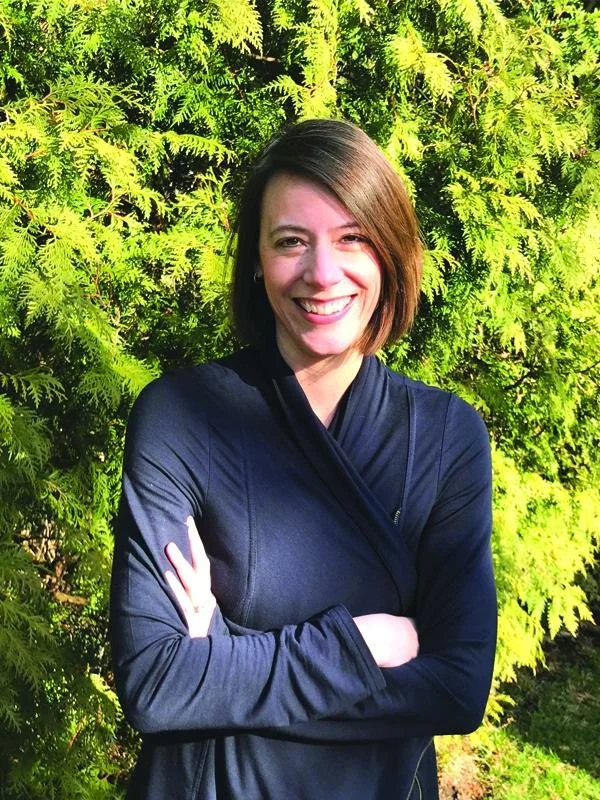
“Where is innovation happening that is not just good storytelling, but also has some really rigorous data behind it? These are kind of the bright spots in my world.”
-
Lindsey Leininger is a health policy researcher specializing in the health care safety net and public health. She has advised venture-backed Medicaid startups on data and evaluation activities, led an award-winning public education campaign during the COVID-19 pandemic, and trained the first cohort of insurance navigators during the ACA Marketplace launch. She also spent a decade as an analytics contractor for Medicaid agencies. Lindsey earned a PhD in Health Policy from the University of Chicago.
Lindsey Leininger



The best leadership training for clinicians & executives redesigning health care.

EPISODE 27 - Don Berwick, co-founder of the Institute for Healthcare Improvement, joins us to explore: Who should be on hospital boards? What metrics should their pay be tied to? We also touch on universal health insurance, value-based payments, and the need to expand resources to primary care.
TRANSCRIPT
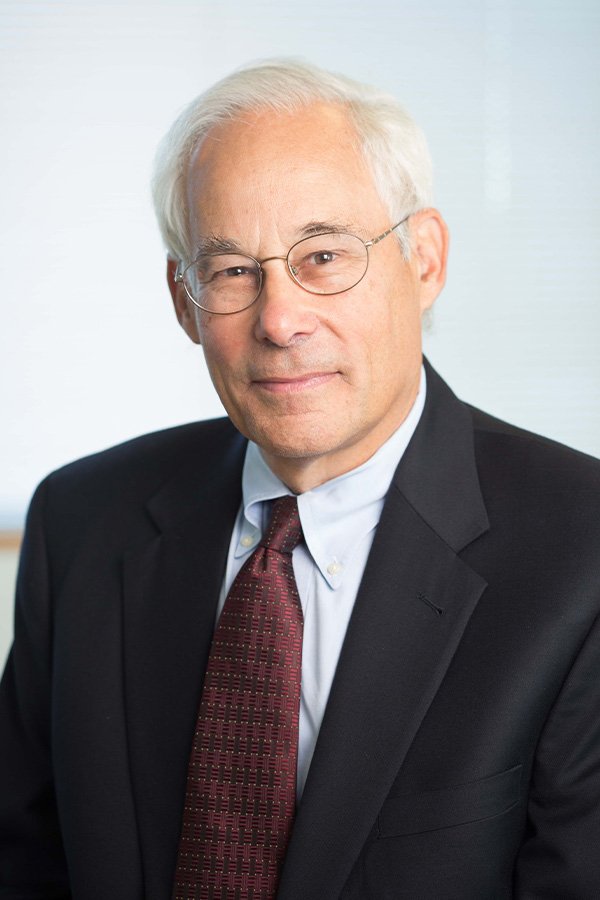
“Governance should be largely vested in people who give care and people who get care, not in financiers.”
-
Donald M. Berwick, MD, MPP, is a leading authority on healthcare quality improvement. He co-founded the Institute for Healthcare Improvement and served as its CEO for nineteen years. His lifelong work has focused on transforming global patient safety and clinical medical systems. Dr. Berwick also led the Centers for Medicare & Medicaid Services under President Obama. He earned his medical and public policy degrees from Harvard University. He is a pediatrician and Harvard professor.
Don Berwick

EPISODE 26 - When there is an adverse event in a hospital, what does the ideal response look like? What values must guide the effort? Chi-Cheng Huang, who has spent more than two decades improving hospital care, responds to Episode 25. He’s a practicing physician and faculty member at the Wake Forest School of Medicine.
TRANSCRIPT
“We should all be at that point where we're humble, we're courageous, we're transparent, and we want to do what's best for people, but also for systems.”
-
Dr Chi-Cheng Huang is a physician, health care leader, entrepreneur, and social advocate with more than two decades of experience improving hospital care. He has led initiatives in hospital-at-home, virtual care, telehealth, and AI-supported clinical decision-making, while holding leadership roles at Boston Medical Center, Lahey Hospital, Atrium Wake Forest, and Inbound Health. He is currently the Deputy Editor of Hospital Focused Content at DynaMed and a practicing clinician and faculty member at Wake Forest School of Medicine.
Chi-Cheng Huang
EPISODE 25 - What does a culture of safety in a hospital look like from the perspective of clinicians? How about from the perspective of patients? And how will that change with AI? Peter Lachman, an internationally recognized expert on hospital quality and safety and former CEO of the International Society for Quality in Healthcare (ISQua), shares his perspective.
“The first step is assessing the culture of the organization. That's the very first thing you have to do. You can have as many good processes as you like, but if you haven't got a good culture, it's not going to work.”
-
Dr Peter Lachman is Director of the Patient Safety Movement Foundation’s Global Patient Safety Fellowship and works on programmes across Africa and Ireland (RCPI). He was CEO of ISQua (2016–2021), Deputy Medical Director for Patient Safety at Great Ormond Street Hospital (2006–2016), and a Health Foundation Quality Improvement Fellow at IHI. He is lead editor of the OUP Handbooks on Patient Safety, Medical Leadership, and Quality Improvement.
Peter Lachman
EPISODE 24 - What’s important in modern day hospital quality improvement? Michael Calderwood, Chief Quality Officer at Dartmouth Health, emphasizes better coordination of care, better teamwork, and better conversations with patients and communities.
“A lot of what we do in healthcare takes us away from the patient. We see the patient, then have to go back to a computer to write our orders, to write our notes. How do you get people back to the bedside?”
-
Michael S. Calderwood, MD, MPH, is Chief Quality Officer of Dartmouth Hitchcock Medical Center, where he oversees patient safety, clinical quality, patient experience, process improvement, regulatory compliance, and organizational accountability. He co-chairs the medical center’s Quality Committee and significant-event review process. Calderwood earned his MD from the University of Chicago, and his MPH from Harvard.
Michael Calderwood
EPISODE 23 - Don Berwick, co-founder of the Institute for Healthcare Improvement, joins us to explore: What is the current state of hospital quality and safety in the United States? Are hospital boards of directors making it a priority? What impact might AI have?
“The more patients are involved, and not just involved, I'd say in control of the decisions that affect them, the better the care looks. We need to understand that in training and preparation of young professionals.”
-
Donald M. Berwick, MD, MPP, is a leading authority on healthcare quality improvement. He co-founded the Institute for Healthcare Improvement and served as its CEO for nineteen years. His lifelong work has focused on transforming global patient safety and clinical medical systems. Dr. Berwick also led the Centers for Medicare & Medicaid Services under President Obama. He earned his medical and public policy degrees from Harvard University. He is a pediatrician and Harvard professor.
Don Berwick
The Hosts

Glyn Elwyn, BA, MD, MSc, PhD, FRCGP, is a clinician and researcher. He is a tenured professor at The Dartmouth Institute for Health Policy and Clinical Practice in the USA. He has visiting chairs at Radboud University, Nijmegen, University College London, and the University of Lausanne. His work focuses on implementing change in how healthcare is delivered: whether it be about critical decisions or a better way of getting effective things done as well as possible.
Glyn Elwyn

Chris Trimble founded Treehouse Audio Productions in 2021, intent on helping clients share their expertise, with impact, through the medium of recorded audio. Prior to founding Treehouse, Chris was a professor at the Tuck School of Business at Dartmouth for 17 years. He has written six books on innovation, the last of which focused on innovation in health care delivery. Chris holds a master’s degree in business and bachelor’s degrees in engineering and music.
Chris Trimble